
5 Benefits of Flexible Workspaces

Updated: September 29th, 2026
Published: November 21, 2025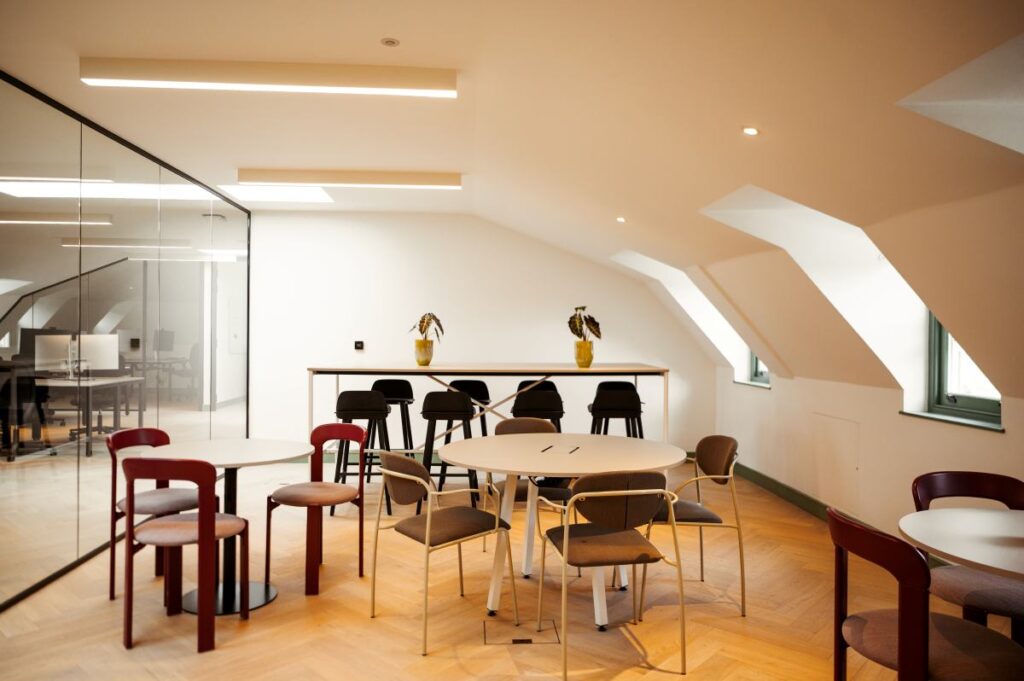
The traditional office lease – five years minimum, often longer, with rigid terms and substantial upfront capital expenditure – emerged in an era of predictable business trajectories. Companies could reasonably forecast their space requirements half a decade out, and growth rates were stable. Business models didn’t fundamentally shift every eighteen months.
That world no longer exists for most organisations. Headcount fluctuates, projects demand rapid team expansion followed by contraction, and hybrid work models mean occupancy rates vary wildly week to week. Companies that lock themselves into conventional long-term leases find themselves either paying for empty desks or scrambling for expansion space they can’t access without renegotiating or relocating entirely.
Flexible workspaces address this volatility. And for many businesses, they represent a more rational alignment between how companies actually operate now and how they occupy space.
Reduced Financial Commitment and Risk
Traditional leases require substantial capital outlay before a single employee sits down. Fit-out costs, furniture, technology infrastructure, deposits, legal fees – the entry cost for conventional office space can reach six figures even for modest spaces. If the business falters, that investment evaporates. If growth exceeds projections, you’re still bound to inadequate space.
Flexible workspaces operate on fundamentally different economics: the capital expenditure is borne by the operator, not the occupier. The furniture, technology, kitchens, meeting rooms, and reception are all provided, and the financial commitment becomes operational expenditure, predictable and contained.
This matters particularly for businesses without certainty about their trajectory. Startups, companies entering new markets, project-based operations – all face meaningful risk when committing to long-term property obligations. Flexible space allows them to scale appropriately without betting the business on a five-year lease.
Even established companies can benefit. Property represents one of the largest fixed costs on most balance sheets, so converting it to variable expenditure that tracks actual usage rather than projected need improves financial flexibility and reduces stranded assets.
Immediate Scalability Without Disruption
Growth should be an operational concern, not a real estate crisis. Yet companies in conventional offices regularly face exactly that: success creates the problem of needing more space faster than lease terms or availability permit.
Flexible workspaces allow organisations to add or reduce capacity with minimal friction. Need five more desks next month? That’s a conversation, not a relocation project. Winding down a department? Release the space without penalty clauses or subletting headaches.
This responsiveness extends to geographic expansion. Opening a presence in a new city traditionally required committing to a lease before understanding whether the market justified it. Flexible space allows companies to establish operations, test demand, and scale or withdraw based on actual performance rather than initial projections that might prove optimistic.
Access to Premium Locations Without Premium Commitment
Location matters: the right address signals credibility, attracts talent, and positions companies near key clients, partners, or industry clusters. But prime locations command premium rents and typically require long commitments that small or growing companies can’t justify.
Flexible workspaces in sought-after areas provide access without the prohibitive entry cost: a business can operate from Mayfair or Shoreditch for the duration it actually needs that presence, whether that’s three months or three years, without the capital requirements or lease obligations those addresses would otherwise demand.
This democratises access. Companies that would be priced out of certain locations entirely can establish themselves there during critical growth phases, then relocate once they’ve built the client base or reputation that justifies a larger commitment.
Built-In Infrastructure and Services
The mundane operational demands of office space consume time and attention that most businesses would prefer to allocate elsewhere. Internet connectivity, furniture procurement, cleaning services, reception coverage, meeting room booking, kitchen supplies, security, maintenance – individually minor, collectively substantial.
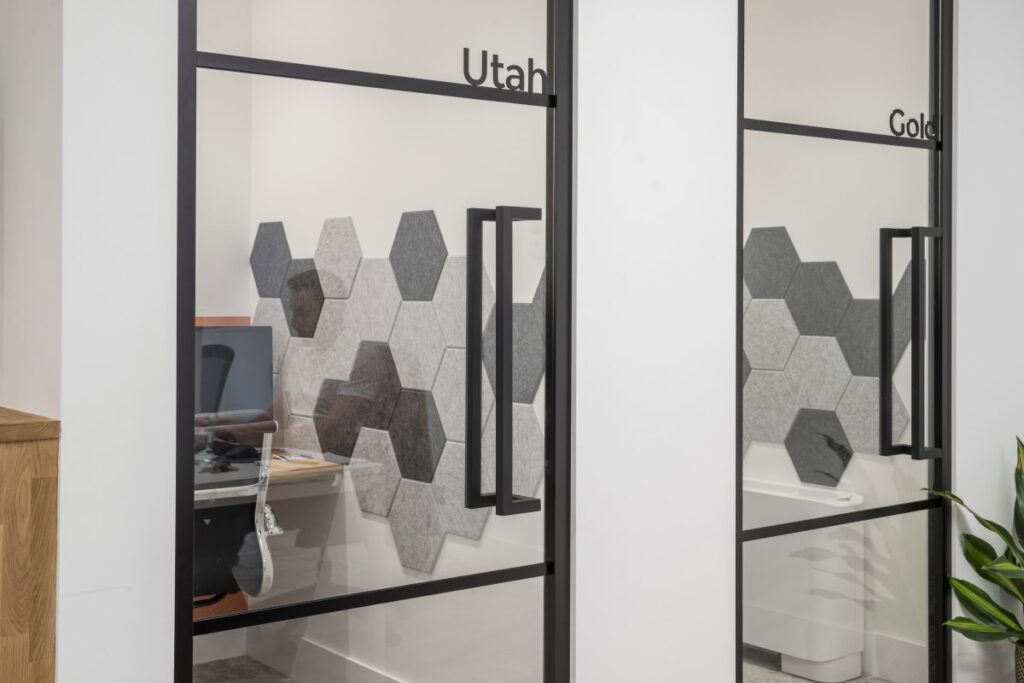
Flexible workspaces tend to bundle these as part of the offering: IT infrastructure is installed and maintained professionally, meeting rooms are equipped and cleaned, and receptionists handle visitors and deliveries. Coffee gets restocked, lights get replaced and air conditioning gets serviced.
This matters most for companies where property management isn’t core competency. A law firm, consulting practice, or technology company should be allocating partner time to client work, not negotiating with cleaning contractors or troubleshooting internet outages.
Professional Environment Without Capital Expenditure
It’s a truth universally acknowledged that first impressions influence client perceptions, recruitment success, and employee satisfaction. An office that appears makeshift or poorly maintained communicates financial instability or lack of professionalism, regardless of the actual business performance.
Creating a polished environment in a conventional space requires substantial investment. Quality furniture, proper lighting, decent artwork, well-maintained facilities, functional meeting spaces – these aren’t trivial expenses. Companies often underinvest initially, intending to upgrade later, and end up operating in substandard environments for years because the capital for improvement never materialises.
Flexible workspaces provide professionally designed, well-maintained environments from day one. The aesthetic quality and functional design reflect what a specialist operator can achieve with scale and expertise, not what a growing business can cobble together on a limited budget.
This matters for recruitment, as talented candidates are sure to evaluate the workplace environment as part of their decision. An office that feels temporary or compromised signals that the company hasn’t invested in creating a proper workspace, which raises questions about stability and commitment to employee experience.
Finding An Office Space That Works For You
At Soul Spaces, we assess whether a flexible workspace genuinely suits your situation or whether a conventional lease would better serve your requirements. As tenant reps, we evaluate your growth projections, capital position, and operational needs, then identify options – flexible or traditional – that align properly. We’ll negotiate terms with operators, ensuring you’re not paying list pricing for flexibility and that contract terms actually permit the scalability that justifies the cost.
We also offer our own expert-run flexible workspace options, with serviced London offices in some of the most coveted postcodes in the capital. From offices inside The Shard to Borough Market, our spaces are built to work around your needs.

Ready to find your dream office?