
How to Choose Ergonomic Office Furniture

Updated: March 4th, 2026
Published: December 1, 2025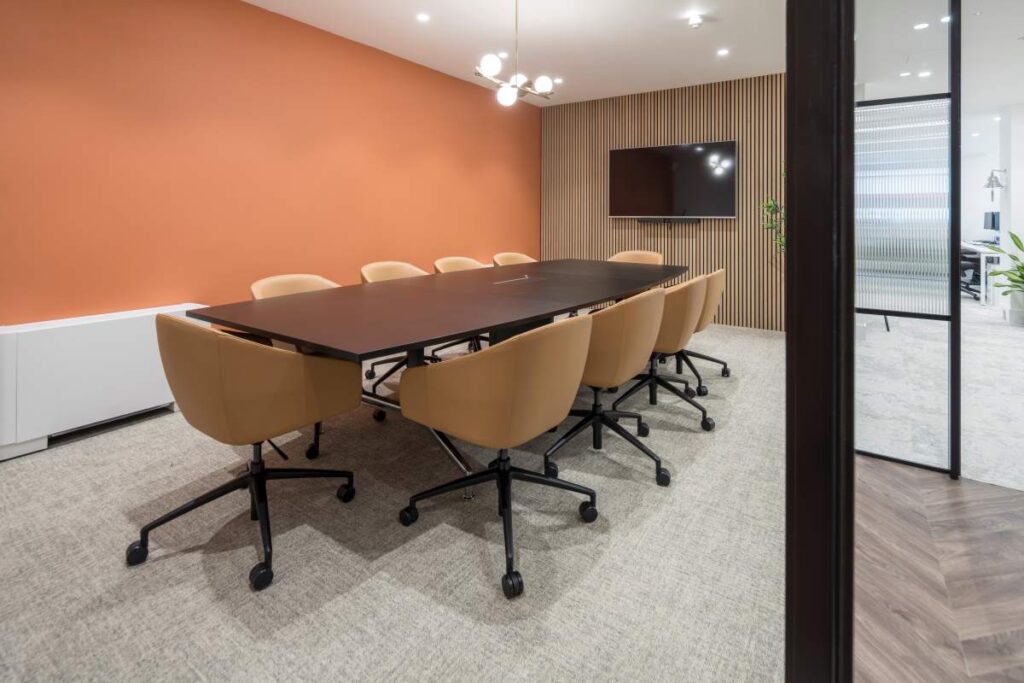
If you’re specifying furniture for a new office or replacing worn-out equipment, the decisions you make now will affect your team’s comfort and productivity for years to come. Ergonomic furniture is what we’d call fundamental infrastructure – infrastructure that directly impacts how effectively your people can work.
You’ve probably seen the statistics: musculoskeletal disorders account for significant productivity losses across UK workplaces, with poorly specified seating and desk arrangements contributing to chronic discomfort, reduced concentration, and increased absenteeism. If you’re serious about supporting your team’s wellbeing whilst protecting your organisation from unnecessary absence costs, furniture specification deserves rigorous attention.
Evaluating Chair Performance
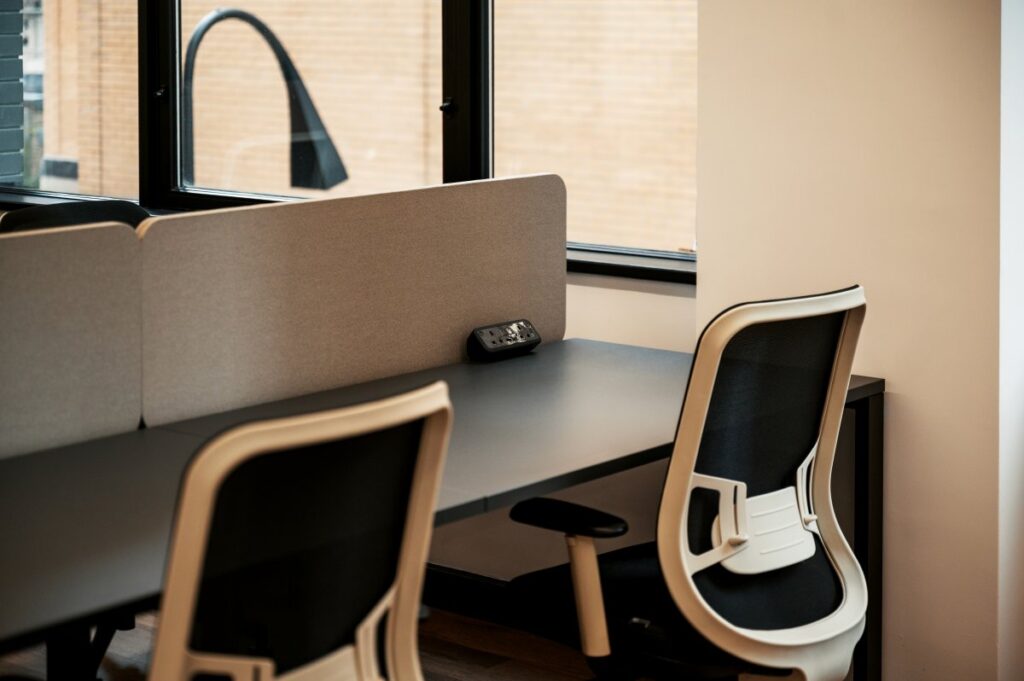
When you’re assessing task chairs, you’ll want models that provide independent adjustment across multiple axes. Look for pneumatic height control that allows feet to rest flat whilst maintaining a 90-degree knee angle. If your chairs don’t adjust properly, you’re forcing people into postures that create problems over time.
You’ll need lumbar support that’s both height and depth-adjustable to accommodate the natural curve of the spine. People’s lower backs sit at different heights, so if you’re specifying fixed lumbar support, you’re inevitably failing some proportion of your team. The same applies to armrests – they require multi-directional adjustment to prevent shoulder elevation whilst typing. If your armrests don’t move independently, they’re essentially decorative rather than functional.
Don’t forget seat depth adjustment. If you’ve got people of varying heights on your team (which you likely do), compression behind the knees from poorly fitted seats restricts circulation during extended sitting periods. This isn’t a minor comfort issue – it’s a physiological problem that accumulates throughout the day.
Pay attention to material quality as well. If you’re choosing between mesh and foam upholstery, mesh backrests offer superior breathability, particularly in warm office environments or if your building’s climate control runs hot. You’ll want a five-star base configuration for stability, with castors appropriate to your flooring surface – hard castors for carpet, soft castors for hard floors. Get this wrong and your chairs either won’t roll smoothly or they’ll damage your flooring.
Desk Configuration and Adjustability
If you’re still specifying fixed-height desks, you’re missing a significant opportunity. Sit-stand desks have transitioned from wellness trend to workplace standard in progressive organisations. When your team can alternate between seated and standing positions throughout the day, you’re reducing static loading on the spine and improving circulation.
Here’s the thing though: if you’re going to invest in sit-stand capability, specify electric height adjustment. Manual mechanisms sound cost-effective until you realise your team won’t use them because they’re too cumbersome. If you want the behavioural change that delivers health benefits, you need adjustment that’s smooth and effortless enough to use multiple times daily.
You’ll need to think about desk depth based on monitor placement and task requirements. A minimum depth of 800mm accommodates a standard monitor at appropriate viewing distance, whilst deeper surfaces support multiple screens or physical reference materials. If your team works with drawings, samples, or reference documents alongside their computers, shallow desks create constant frustration and awkward postures as people crane around limited space.
Cable management systems integrated into the desk structure aren’t optional extras – they maintain visual order and reduce trip hazards. If you’ve ever worked somewhere with cables snaking across floors and draped over desk edges, you know how quickly this becomes both a practical concern and a psychological irritant. Messy cables make spaces feel chaotic regardless of how organised your team actually is.
Supporting Varied Work Modes
If you’re assuming that desks and task chairs constitute complete furniture specification, you’re missing significant portions of how people actually work. When you observe knowledge workers throughout their day, they’re not just sitting at assigned desks. Contemporary office work involves multiple postures and activities beyond traditional desk-based tasks.
You’ll want collaborative seating that supports dynamic group work – furniture that invites people to gather for quick discussions or extended brainstorming sessions. If you’re designing breakout areas, consider lounge furniture for focused reading or mobile device use. Standing-height surfaces work brilliantly for brief interactions or laptop work when people need a postural change without committing to a full standing desk session.
For meeting spaces, you’ll need chairs that provide adequate support without the extensive adjustability of task seating. If your meeting rooms serve multiple functions, stacking or nesting capability allows spatial flexibility. There’s no point specifying beautiful fixed chairs if you can’t reconfigure the room when you need to host different group sizes or activities.
Why Tenant Representation Matters
Here’s where the commercial real estate market creates problems you mightn’t anticipate. When you’re negotiating directly with landlords and serviced office operators, they’re often prioritising furniture that meets minimum compliance standards whilst maximising their margins. They’re not necessarily trying to shortchange you – they’re optimising for their business model, which rarely aligns with your employees’ ergonomic needs.
If you’re working with specialists who match teams with the right space like us at Soul Spaces, you’re fundamentally shifting this dynamic. Independent advisors understand that furniture specification directly impacts operational performance – they’ve seen the correlation between quality furniture and team satisfaction enough times to prioritise it properly.
When you’ve got professional representation, you’re negotiating fit-out contributions that fund genuinely ergonomic furniture rather than basic contract-grade alternatives. More importantly, your advisor leverages market knowledge to identify spaces where landlords will invest in quality infrastructure, or secures concessions that allow you to specify your own solutions rather than accepting whatever comes as standard.
This advocacy proves particularly valuable during lease negotiations. If you’re signing a long lease, you’ll want agreements that include furniture refresh cycles, ensuring that ergonomic standards don’t degrade over extended terms. A tenant representative’s independence from landlord interests means their recommendations prioritise your team’s wellbeing over cost minimisation – a crucial difference when you’re making decisions that affect daily comfort for years.
Material Durability and Lifecycle Considerations
When you’re investing in commercial furniture, you’ll want pieces that provide a minimum ten-year service life under normal office conditions. Examine warranty terms carefully – they indicate manufacturer confidence in durability. If you’re only getting a two-year warranty on a chair, that tells you something important about expected longevity.
You’ll need to assess frame construction, adjustment mechanisms, and upholstery against different durability standards. If you’re specifying chairs where the gas lift fails after eighteen months or fabric pilling makes them look shabby within two years, you’re creating ongoing replacement costs and team dissatisfaction.
Consider maintenance requirements and replacement part availability as well. If you’re choosing modular systems that allow component replacement, you’ll extend product lifespan and reduce waste. When your furniture has readily available fabric panels or seat cushions, you can refresh individual pieces as needed without complete replacement. This matters both financially and environmentally – you’re not discarding entire chairs because one component has worn out.
Environmental Certification
If you’re pursuing sustainability goals – or if your team includes people who genuinely care about environmental impact – furniture credentials matter more than you might assume. Look for certifications such as BIFMA LEVEL or Cradle to Cradle, which assess environmental impact across the product lifecycle. You’ll want to know the percentage of recycled content, particularly in steel chair bases and plastic components.
When you’re choosing between manufacturers, consider that local production reduces transport emissions and often provides superior service support. If you’re buying from European manufacturers, you’ll typically get shorter lead times and easier warranty claims compared to products shipped from distant markets.
Testing Before Specification
You can’t evaluate ergonomics theoretically. If you’re specifying furniture for your entire office based on catalogue descriptions, you’re taking an expensive gamble on equipment that will affect your team’s daily experience for years. Arrange trials of shortlisted furniture with team members representing different body types and working styles.
When you’re testing, remember that a chair supporting one person admirably may prove uncomfortable for another – height, weight, and body proportions all affect ergonomic fit. You’ll want structured feedback on adjustability, comfort during extended use, and intuitive operation of controls. If your team can’t figure out how to adjust something within a few minutes, they won’t use the features you’ve paid for.
Pay attention to acoustic properties as well, particularly if you’re working in open-plan environments. Some task chairs produce mechanical noise during adjustment or movement that proves genuinely distracting in quiet settings. If you’re creating focus zones, squeaky chairs undermine your acoustic strategy.
If you’re managing a distributed team or rapid growth, you might not have everyone available for testing. In that case, at least ensure your trials include people at the extremes of your size range – your tallest, shortest, and heaviest employees will reveal whether furniture truly accommodates variation or only works for average builds.
The Long-Term Value Proposition
When you’re making furniture decisions, remember you’re creating infrastructure that will affect your organisation for years. If you’re approaching specification with rigour and attention to human factors, you’ll see returns through reduced discomfort, improved focus, and demonstrated commitment to employee wellbeing.
Conversely, if you’re optimising purely for upfront cost, you’re likely creating problems that will manifest as back pain, fatigue, and eventual staff turnover. The calculation is straightforward: replacing a knowledge worker costs substantially more than the incremental investment in quality furniture. If better ergonomics prevents even one departure or reduces absence by a few days annually, you’ve likely justified the additional expenditure. Most well-specified ergonomic furniture delivers benefits far exceeding this minimal threshold.

Ready to find your dream office?