
Integrating Smart Technology Into Your Office Fit-Out
The Xerox PARC building in Palo Alto pioneered networked computing in the 1970s, though few realised at the time that connecting machines would prove more transformative than the machines themselves. Contemporary smart office technology operates on similar principles – individual components matter less than how they communicate and coordinate. A thermostat provides modest benefit; that same thermostat coordinating with occupancy sensors, calendar data, and weather forecasts creates genuinely intelligent environmental management that adapts to actual patterns rather than operating on fixed schedules.
Integration represents the critical distinction between technology that enhances workspace and expensive gadgetry that impresses during demonstrations but adds limited practical value once novelty fades.
Solving Problems, Not Deploying Features
The temptation is to deploy smart technology because it exists rather than because specific problems require solving. This produces implementations heavy on features but light on actual utility – conference rooms with elaborate control systems that confuse more than assist, lighting schemes so complex that people prefer working in semi-darkness rather than attempting to adjust them.
Effective integration begins by identifying genuine operational challenges technology might address. Environmental comfort that varies uncomfortably throughout the day. Meeting rooms are frequently booked yet sitting vacant because no-shows never release them. Energy consumption is higher than necessary because systems run regardless of actual occupation. Security concerns around after-hours access. These concrete problems justify technological solutions; abstract desires for smart buildings typically don’t.
Environmental Systems as Foundation
Heating, cooling, ventilation, and lighting consume the majority of building energy whilst directly affecting occupant comfort and productivity. Smart environmental management delivers both cost savings and improved workplace quality, making it typically the highest-value technology investment.
Sophisticated systems learn occupancy patterns and adjust preemptively rather than reactively. They coordinate heating, cooling, and ventilation to optimise efficiency. They integrate with weather forecasts to anticipate thermal loads. They provide localised control allowing individuals to adjust conditions in their immediate vicinity without affecting entire zones. For example, the role of lighting in modern offices isn’t to operate independently, but rather coordinate with daylight sensors, occupancy patterns, and task requirements.
The key is invisible operation. Occupants should experience comfortable, consistent environmental conditions without understanding or managing the complexity producing them. When systems require constant manual intervention, the technology has failed regardless of how impressive the underlying sophistication appears.
Occupancy Intelligence Without Surveillance
Understanding how space actually gets used – which areas see heavy occupation, which sit vacant, when demand peaks, how long people typically remain – enables both operational efficiency and strategic space planning. Sensors provide this intelligence without the surveillance concerns that cameras might raise, revealing patterns that inform multiple improvements.
Environmental systems operate only where needed. Cleaning schedules focus on high-traffic areas. Space planning decisions rest on actual usage rather than assumptions. Meeting room booking systems automatically release spaces when no-shows occur. Privacy considerations matter significantly here – anonymous occupancy detection differs fundamentally from individual tracking. The technology should reveal patterns without identifying specific people.
Interoperability Over Isolated Systems
Smart building systems often operate as isolated islands – lighting from one manufacturer, HVAC from another, security from a third, each requiring separate interfaces and providing no coordination. This fragmentation undermines the intelligence these systems supposedly provide.
Future-proof integration demands interoperability from the outset. Open protocols that allow different systems to communicate. Unified control platforms that present coherent interfaces rather than requiring separate apps for every function. APIs that enable integration with business systems beyond purely building functions. This interoperability costs little additional upfront but determines whether systems genuinely coordinate or simply coexist.
Access Control as Operational Intelligence
Traditional access control operates simply – cards or codes unlock doors. Smart integration extends this into comprehensive building management. Access credentials that vary by time and location. Visitor management integrated with reception and calendar systems. After-hours access logged and monitored. Integration with emergency systems for safe evacuation.
Security technology particularly benefits from coordination with other systems. Access sensors inform environmental systems about occupation. Calendar integration enables automatic access for scheduled visitors. Emergency protocols override normal access controls appropriately. This coordination transforms access control from simple door locks into comprehensive operational infrastructure.
Meeting Space Optimisation
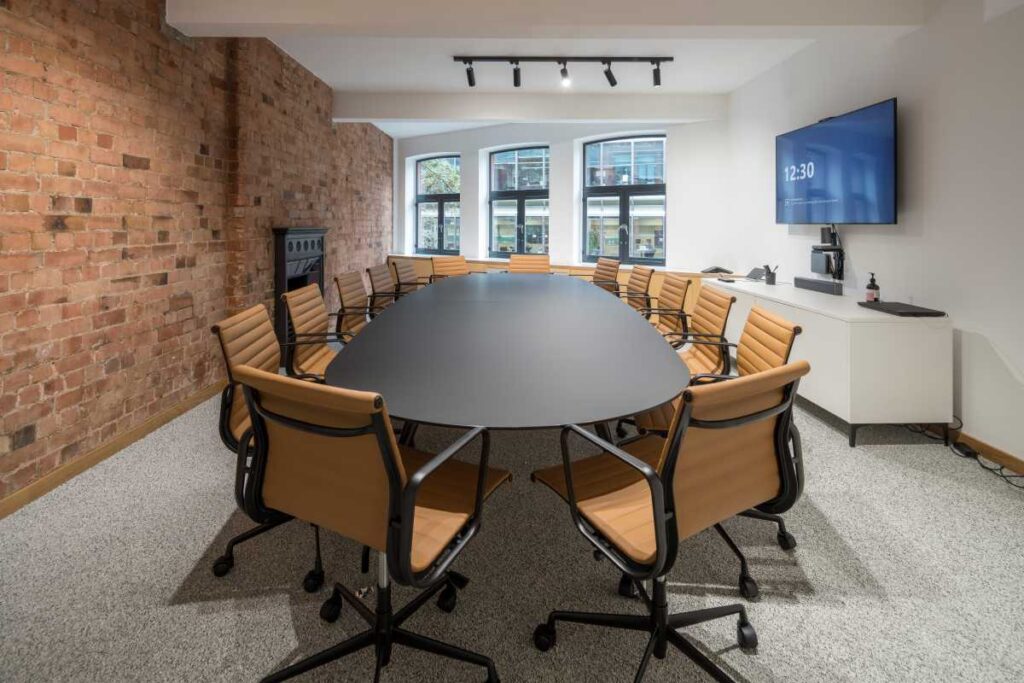
Conference rooms represent expensive real estate that typically operates at thirty to forty percent capacity – frequently booked but often unused when meetings get cancelled or run short. Smart meeting room technology addresses this inefficiency through automated management.
Room sensors detect actual occupation versus booking status, automatically releasing spaces when no-shows occur. Calendar integration enables one-touch meeting initiation. Environmental systems activate only when rooms are occupied. Usage data reveals which rooms serve demand well and which could be repurposed.
The User Experience Imperative
Technology requiring training manuals or technical expertise fails in workplace contexts. Smart building systems must operate intuitively, providing obvious benefits without demanding specialist knowledge. Environmental controls should adjust simply. Meeting rooms should initiate sessions with minimal interaction. Access should work reliably without conscious thought.
This user-centricity determines whether technology enhances or frustrates daily work. Elegant systems recede into background – people benefit without necessarily recognising technology mediating their experience. Poorly designed implementations announce themselves constantly through confusion, complexity, or unreliability.
Phased Implementation Over Big Bang
Attempting comprehensive integration simultaneously creates expensive complexity and operational disruption. Phased deployment allows learning and adjustment whilst maintaining functionality throughout, typically starting with highest-value systems – environmental management and occupancy intelligence – before adding coordination layers and additional capabilities.
This approach also manages obsolescence risk. Technology evolves rapidly; systems installed today will require updating within years. Phased deployment spreads this obsolescence across time rather than creating wholesale replacement requirements simultaneously.
The Professional Approach
If you’re exploring expert workplace transformation services, we at Soul Spaces understand that sophistication means systems working invisibly rather than announcing their presence. The goal is a workspace that responds intelligently to needs whilst requiring minimal conscious interaction from occupants.
Smart building technology should enhance workplace quality and operational efficiency without becoming burdensome or creating dependency on specialist technical knowledge. When integration succeeds, people simply experience better environments and more efficient operations without necessarily understanding the technological infrastructure producing these benefits. That invisibility – technology so effective it disappears into expected functionality – represents genuine intelligence rather than mere gadgetry.
Ready to find your dream office?