
The Role of Lighting in Modern Offices

Updated: September 29th, 2026
Published: November 18, 2025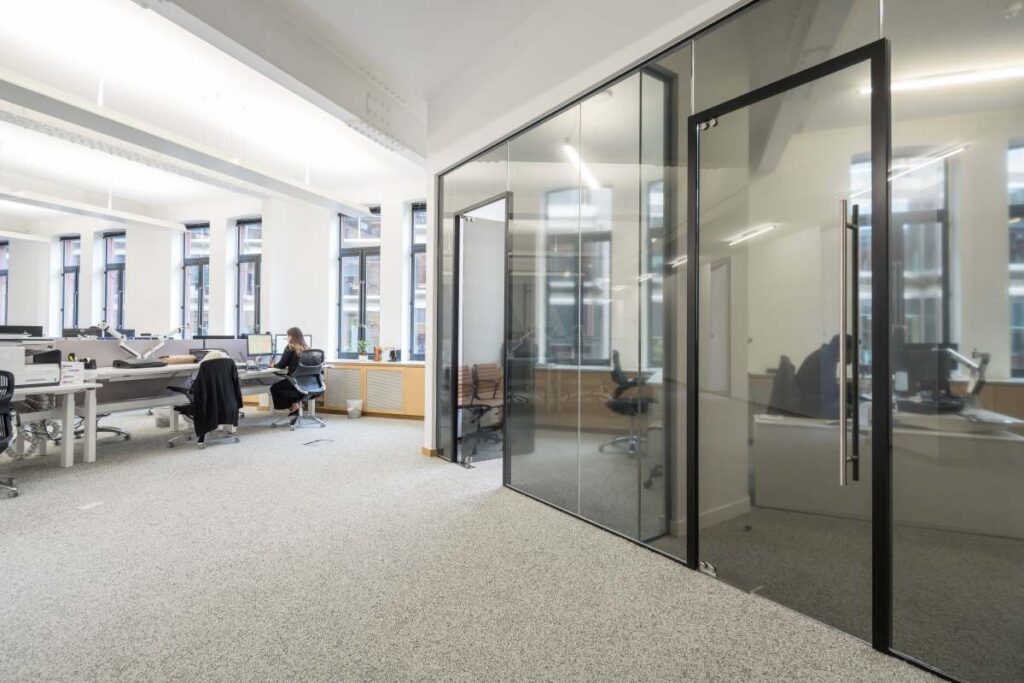
Most organisations spend considerable time deliberating over floor plans, furniture specifications, and technology infrastructure when designing office space. Lighting decisions, by contrast, often get deferred to electrical contractors working from building codes and budget constraints. This sequencing reveals a fundamental misunderstanding of what lighting actually does.
Illumination determines whether employees can see their work. That much is obvious. What receives less attention is how it regulates alertness, influences mood, affects accuracy, and either supports or undermines the biological systems that govern sleep, metabolism, and cognitive function. An office can have excellent furniture and thoughtful spatial planning, but if the lighting is wrong, the entire environment underperforms.
Circadian Biology and Workplace Lighting
The human circadian system evolved to respond to natural light cycles. Photoreceptors in the eye communicate with the brain’s central clock, which then coordinates hormone production, body temperature, and dozens of other physiological processes. Daylight – particularly the blue-rich light of morning – signals wakefulness and suppresses melatonin. As natural light dims in the evening, melatonin production increases, preparing the body for sleep.
Office workers typically spend the majority of daylight hours indoors under artificial illumination that delivers a fraction of the intensity found outdoors, even on overcast days. A well-lit office might provide 500 lux at desk height. Outdoor daylight ranges from 10,000 to 100,000 lux depending on conditions. The difference isn’t trivial. Insufficient daytime light exposure weakens circadian signals, leading to disrupted sleep patterns, daytime fatigue, and metabolic irregularities that accumulate over time.
Research consistently shows that proximity to windows correlates with better sleep quality, reduced sick leave, and higher workplace satisfaction. These aren’t minor improvements. We’re talking about measurable differences in how people function, both during work hours and in their personal lives. Yet interior offices with no daylight access remain standard in many commercial buildings, consigning entire teams to environments that work against their biology.
Colour Temperature and Cognitive Performance
Light carries information beyond brightness. Colour temperature – the warmth or coolness of light, measured in Kelvin – affects both psychological state and task performance. Cooler light, which appears bluish-white, increases alertness and suits analytical work. Warmer light, which has a yellowish cast, feels more relaxing and works better in social or informal settings.
Many modern offices use uniform lighting throughout, typically a neutral white around 4000K that attempts to serve all purposes adequately without excelling at any. This represents a missed opportunity: meeting rooms hosting intensive discussions benefit from cooler, energising light. Breakout areas meant for casual conversation should offer warmer tones that encourage people to actually relax rather than remaining in work mode.
Visual Comfort and Glare Management
Brightness alone doesn’t determine whether lighting is effective: distribution matters just as much. Harsh overhead fixtures create pools of intense light interspersed with deep shadows, where screens become harder to read due to reflections. Eyes constantly adjust to varying light levels within the visual field, leading to fatigue that manifests as headaches, dry eyes, and difficulty concentrating.
Glare comes in two forms: direct glare occurs when bright light sources appear within the line of sight – an unshielded bulb, sunlight through an uncontrolled window. Reflected glare bounces off polished surfaces, monitors, or glossy materials. Both force the eye to work harder than necessary, reducing comfort and accuracy over the course of a workday.
Addressing these issues requires thoughtful fixture selection and placement. Indirect lighting, which bounces illumination off ceilings or walls, spreads light more evenly and eliminates harsh shadows. Anti-glare screens and matte surface finishes reduce reflections. None of this is particularly complex or expensive, yet offices routinely overlook it in favour of standardised lighting plans that prioritise installation cost over long-term performance.
Daylight Access as Design Priority
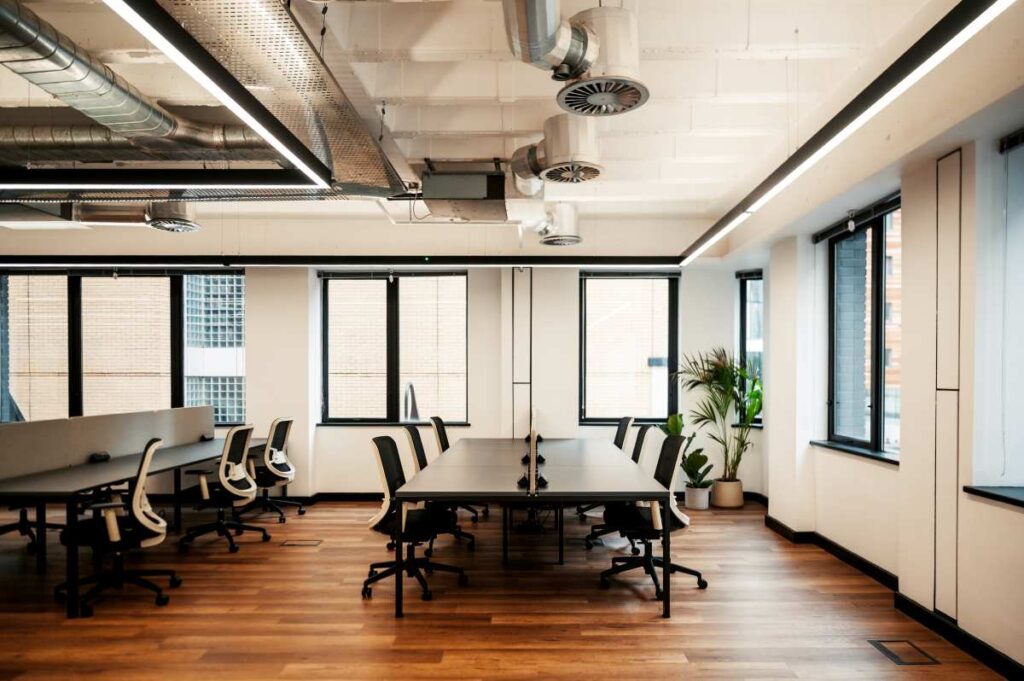
No artificial lighting system replicates daylight completely; natural light varies in intensity and colour throughout the day. It creates changing shadow patterns. It provides visual connection to the outside world, which has psychological benefits independent of illumination quality. Windows also enable passive ventilation and reduce reliance on mechanical systems, though that’s secondary to the human factors.
Buildings designed with deep floor plates push workstations far from windows, creating zones where daylight never reaches. The usual justification involves maximising lettable area or accommodating open-plan layouts that require uninterrupted space. This logic treats daylight as a luxury rather than a necessity, which the evidence doesn’t support. Workers with window access consistently report better sleep, lower stress, and higher job satisfaction than those in interior zones. The performance difference isn’t marginal.
Organisations committed to employee wellbeing should be asking whether proposed spaces provide adequate daylight access before considering other factors. If large portions of the workforce will be relegated to windowless areas, that’s not a minor inconvenience. It’s a design flaw with measurable consequences for health and productivity.
Lighting and Spatial Character
Beyond physiological effects, lighting shapes how spaces feel and function. Low, warm illumination creates intimacy. Bright, cool light promotes activity and alertness. Accent lighting highlights specific features – architectural details, brand elements, artwork – while ambient lighting provides general visibility.
Offices relying solely on overhead ambient fixtures create monotonous environments where every area feels identical. There’s no visual hierarchy, no sense of different zones having different purposes. Layering light sources – combining ambient, task, and accent lighting – introduces variety and allows the environment to communicate intended use without signage or explicit instruction.
Reception areas benefit from warmer, more inviting light that puts visitors at ease. Conference rooms need adjustable lighting that can accommodate both presentations and collaborative discussions. Breakout spaces should feel distinct from workstations, signalling that different behaviours are appropriate in different contexts. Lighting makes these distinctions legible.
The Hidden Costs of Poor Lighting
Finally, it’s worth noting that inadequate lighting rarely produces immediate, dramatic failures. Instead, it degrades performance incrementally. Tasks take slightly longer, errors increase marginally, and employees experience headaches or eye strain they attribute to screen time rather than environmental factors. Over months and years, these small inefficiencies compound into significant productivity losses and elevated healthcare costs.
Workers suffering from chronic eye strain take more sick leave, and they’re more likely to seek employment elsewhere – particularly if they can secure positions in better-designed offices. Recruitment and training costs for replacement staff dwarf whatever savings were achieved through cheap lighting installations, and the apparent “economy” of generic lighting solutions often proves expensive when full costs are considered.
Selecting Space with Lighting in Mind
Improving lighting in existing offices can be challenging, particularly in leased spaces where infrastructure modifications require landlord approval and substantial investment. The more straightforward approach involves evaluating lighting quality during the space selection process, before commitments are made and fit-out budgets are set.
At Soul Spaces, we offer professional guidance on choosing offices and make it our mission to find the right space for you. Whether you’re looking for spaces with abundant daylight access or flexibility for task-level adjustments, our tenant reps do all the heavy lifting for you. Reach out to our team today and find out how we can help you find a space that blends form with functionality. We evaluate lighting quality during the selection process; assessing window orientation, ceiling heights, floor plate depth, and glazing specifications, ensuring the space can deliver proper illumination from the outset rather than requiring expensive retrofits later.
We negotiate lease terms that permit the modifications you’ll need, secure better pricing than you’d achieve independently, and ensure you’re selecting an environment that supports performance rather than compromising it. And the difference is simple: having representation that understands both the property markets – and how spatial decisions affect the people working within them.

Ready to find your dream office?