
Why Is It Important to Have the Right Office Furniture?
Herman Miller’s Aeron chair, launched in 1994, demonstrated something the office furniture industry had previously missed: that genuinely well-designed furniture commands premium pricing not despite its cost but because its performance justifies the investment. The Aeron succeeded not through marketing but through solving real problems – back pain, circulatory issues, thermal discomfort – that cheap task chairs simply ignored. Three decades later, the principle persists: appropriate office furniture matters enormously, and the consequences of getting it wrong compound daily across the entire occupation period.
Furniture represents one of the largest expenses in office fit-out, typically second only to construction work itself. Yet businesses often approach furniture selection with insufficient rigour, treating it as commodity procurement rather than infrastructure investment affecting productivity, wellbeing, and professional perception across lease terms.
Ergonomics as Productivity Infrastructure
Poor furniture creates genuine health problems. Chairs without proper lumbar support cause back pain that develops gradually but affects performance measurably. Desks at incorrect heights create neck and shoulder tension. Inadequate monitor positioning strains eyes and causes headaches. These aren’t minor discomforts but cumulative problems that reduce productivity, increase sick leave, and contribute to staff turnover.
Ergonomic furniture prevents these problems through design that accommodates human physiology rather than fighting it. Adjustable chairs allowing personalised support. Desk heights accommodating different body proportions. Monitor arms enabling optimal screen positioning. The productivity gain from reducing physical discomfort typically exceeds furniture cost differential within months, making ergonomic specification genuine value rather than expensive preference. Understanding how to choose ergonomic office furniture reveals that appropriate selection involves assessing actual work patterns and physical requirements, rather than selecting based primarily on aesthetics or price.
Durability Matched to Commercial Use
Residential furniture proves inadequate for commercial environments. Office chairs endure eight-hour daily use, five days weekly, fifty weeks annually – usage patterns that destroy domestic furniture rapidly. Desks support equipment loads and usage intensity that residential pieces weren’t designed to handle. Conference tables accommodate frequent heavy use that residential dining tables would show within months.
Commercial-grade furniture specifies warranties and performance ratings reflecting genuine use expectations. A task chair warranted for eight-hour daily use over five years costs more than domestic equivalents but proves cheaper over its lifespan than repeatedly replacing inadequate seating. This durability calculation should inform specification – understanding actual use patterns and selecting furniture graded appropriately prevents the false economy of cheap furniture requiring frequent replacement.
Flexibility Enabling Workspace Evolution
Business requirements change faster than furniture lifecycles. Teams expand and contract. Working patterns evolve. Organisational structures reorganise. Furniture that accommodates this change through modular systems and reconfigurable elements extends useful life considerably whilst enabling workspace to adapt rather than constraining it.
Bench desking systems allow team expansion without wholesale replacement. Modular storage adapts to changing requirements. Mobile furniture enables reconfiguration as needs shift. This flexibility prevents furniture from becoming the constraint forcing expensive replacement when business evolution demands spatial reorganisation. The premium for adaptable systems typically proves cheaper than replacing fixed furniture that no longer suits changed circumstances.
Acoustic Performance in Open Environments
Furniture contributes significantly to workspace acoustics, though this remains underappreciated during selection. Hard surfaces – glass desks, metal filing cabinets, plastic chairs – reflect sound, exacerbating acoustic problems in open plans. Upholstered furniture, acoustic screens, sound-absorbing materials integrated into workstations – these elements contribute to acoustic comfort that affects concentration and productivity.
High-backed booth seating creates acoustic separation in open environments. Fabric-wrapped screens absorb sound whilst providing visual privacy. Storage units with acoustic properties reduce noise transmission. This acoustic function should inform furniture specification in open or semi-open environments where sound management directly affects working conditions.
Professional Presentation and Brand Expression
Furniture quality affects how clients perceive your business. Shabby, mismatched, obviously cheap furniture raises questions about whether a similar economy characterises your work. Quality furniture maintained well signals professional standards and organisational stability in ways that clients notice and factor into credibility assessments.
Furniture also provides opportunity for brand expression – materials, colours, styles that align with market positioning. Law firms project establishment credibility through traditional furniture in quality materials. Creative agencies signal innovation through contemporary design and bold choices. Technology companies demonstrate modernity through minimalist aesthetics and advanced materials. This alignment between furniture and brand positioning reinforces market identity rather than contradicting it.
Space Efficiency and Density Optimisation
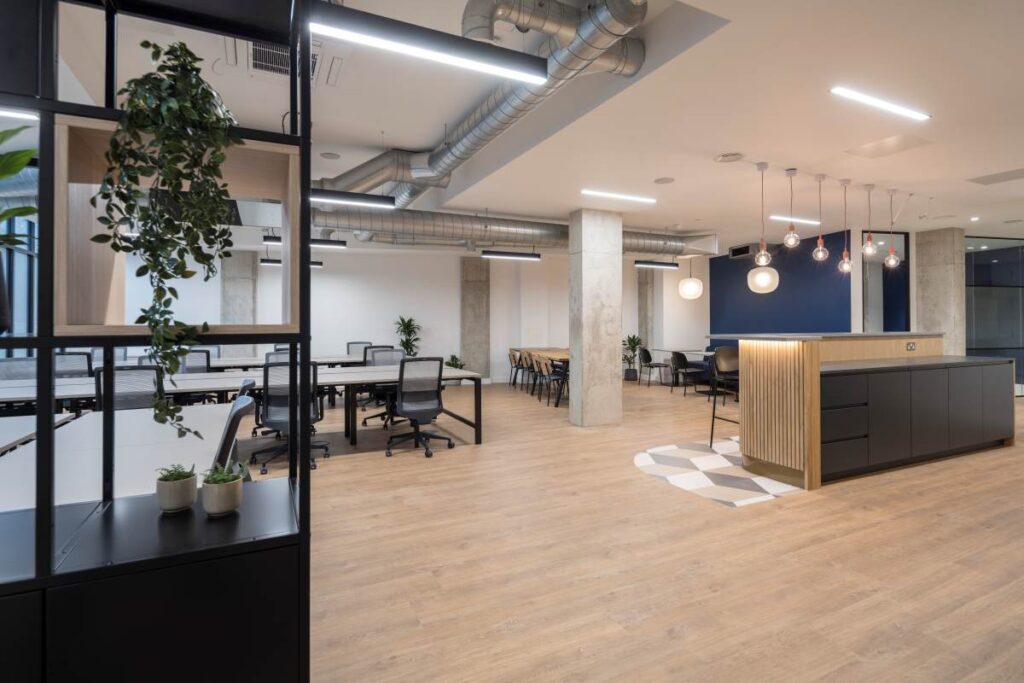
Furniture dimensions directly affect how many people you can accommodate comfortably. Oversized desks waste space. Inefficient layouts create dead zones. Poor furniture selection can reduce capacity by twenty to thirty percent compared to optimised specifications – a substantial cost when rent represents major overhead.
Space-efficient furniture doesn’t mean cramped conditions but rather appropriate sizing for actual requirements. Desks sized for laptops and one monitor rather than assumptions from desktop-computer eras. Storage scaled to genuine needs rather than over-provision. Meeting furniture optimised for typical group sizes. This efficiency allows comfortable occupation at appropriate density rather than either wasteful space consumption or uncomfortable overcrowding.
Lifecycle Cost Beyond Purchase Price
Cheap furniture proves expensive over typical occupation periods. It wears quickly, requiring early replacement. It breaks, creating ongoing maintenance costs. It looks shabby within years, undermining professional presentation precisely when lease terms have years remaining. Quality furniture costs more initially but delivers value through extended lifespan, maintained appearance, and reduced ongoing costs.
Calculating lifecycle cost requires projecting realistic lifespan under actual use, factoring maintenance requirements, considering replacement timing against lease terms. A chair costing three times more but lasting four times longer whilst requiring less maintenance proves cheaper over any reasonable period. This lifecycle perspective should inform specification rather than optimising only against initial purchase price.
The Wellbeing Dimension
Workplace wellbeing depends significantly on physical comfort, which furniture determines more than any other single factor. Uncomfortable seating creates fatigue and physical strain. Poor desk ergonomics cause persistent discomfort. Inadequate storage creates clutter and stress. These factors affect both immediate productivity and longer-term satisfaction and retention.
Investing in furniture that genuinely supports wellbeing – ergonomic seating, appropriately sized work surfaces, adequate storage, comfortable breakout furniture – demonstrates organisational commitment to staff experience in tangible daily ways. This investment pays returns through reduced turnover, lower sick leave, higher productivity, and improved morale that financial calculations often miss but genuinely affects business performance.
The Professional Approach
Soul Spaces works as experienced office fit out specialists serving London businesses, understanding that furniture specification should balance ergonomic requirements, durability expectations, flexibility needs, aesthetic considerations, and lifecycle costs rather than optimising purely against initial price.
Ready to find your dream office?